Phaeacians
The Phaeacians are a seafaring people who inhabit the island of Scheria, ruled by King Alcinous and Queen Arete. They are presented as a uniquely favored race, near kin to the gods, and their society represents the pinnacle of civilized hospitality in the Odyssey. Yet their very perfection—their magical ships, their effortless wealth, their isolation from other peoples—carries a shadow: the threat of divine punishment for their role in escorting wayfarers home. Their encounter with Odysseus is the hinge on which his return turns, and their subsequent punishment by Poseidon marks the cost of violating the cosmic order that separates mortals from gods.
Origins and Divine Kinship
The Phaeacians originally lived in Hypereia, near the lawless Cyclopes, who plundered them. Their king Nausithous, son of Poseidon and the giantess Periboea, moved them to Scheria, far from all other people, and fortified the city with walls, temples, and divided lands. After Nausithous died, his son Alcinous inherited the throne. The Phaeacians are thus of mixed divine and giant ancestry, which explains both their extraordinary abilities and their precarious position between the human and the divine. Alcinous himself acknowledges this kinship when he tells Odysseus that the Phaeacians are as near of kin to the gods as the Cyclopes and the savage giants are.
Society and Customs
The Phaeacians are preeminently a maritime people. They pride themselves on their masts, oars, and ships, with which they travel far over the sea. Their vessels require no pilots and have no rudders as those of other nations have; the ships themselves understand what their passengers are thinking and want, and can traverse the sea even when covered with mist and cloud. This magical navigation is both their greatest gift and the source of their eventual downfall. On land, they excel in running, dancing, and feasting, but not in boxing or wrestling. Their women are the finest weavers in the world, taught by Athena. The palace of Alcinous is of breathtaking splendor: walls of bronze, doors of gold, silver pillars, and a floor of bronze. Golden and silver mastiffs, fashioned by Hephaestus, guard the entrance, and golden figures of young men hold torches to light the banquets. Outside lies a magnificent garden of four acres, with fruits that never fail all year round, watered by two streams.
The Reception of Odysseus
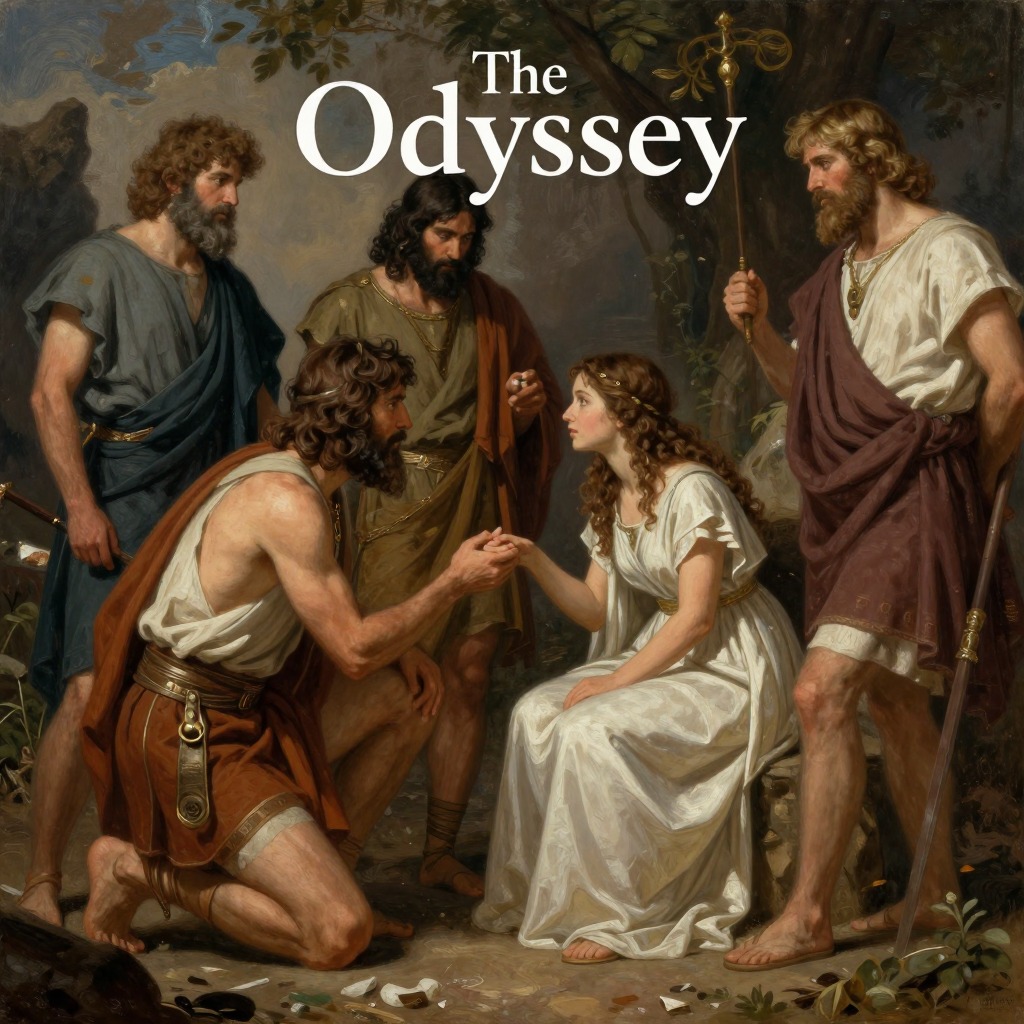
When Odysseus arrives on Scheria, naked and exhausted after his shipwreck, he is first found by Nausicaa, the daughter of Alcinous, who is prompted by Athena to go to the river to wash clothes. Nausicaa, struck by Odysseus's transformed appearance after he bathes, gives him clothes and directs him to the city, instructing him to approach her mother Arete first. Athena shrouds Odysseus in a mist as he enters the city, and he passes unseen to the palace. There he supplicates Arete, and the aged counselor Echeneus rebukes Alcinous for allowing a stranger to sit in the ashes. Alcinous raises Odysseus, gives him a seat, and promises him an escort home. The next day, at an assembly, Alcinous announces that a ship will be prepared, and a great feast is held. During the feast, the blind bard Demodocus sings of the quarrel between Odysseus and Achilles, and later of the Trojan Horse, causing Odysseus to weep. Alcinous, noticing his guest's distress, asks him to reveal his identity, which Odysseus finally does in Book IX, beginning the long narration of his adventures.
The Athletic Games and Gifts
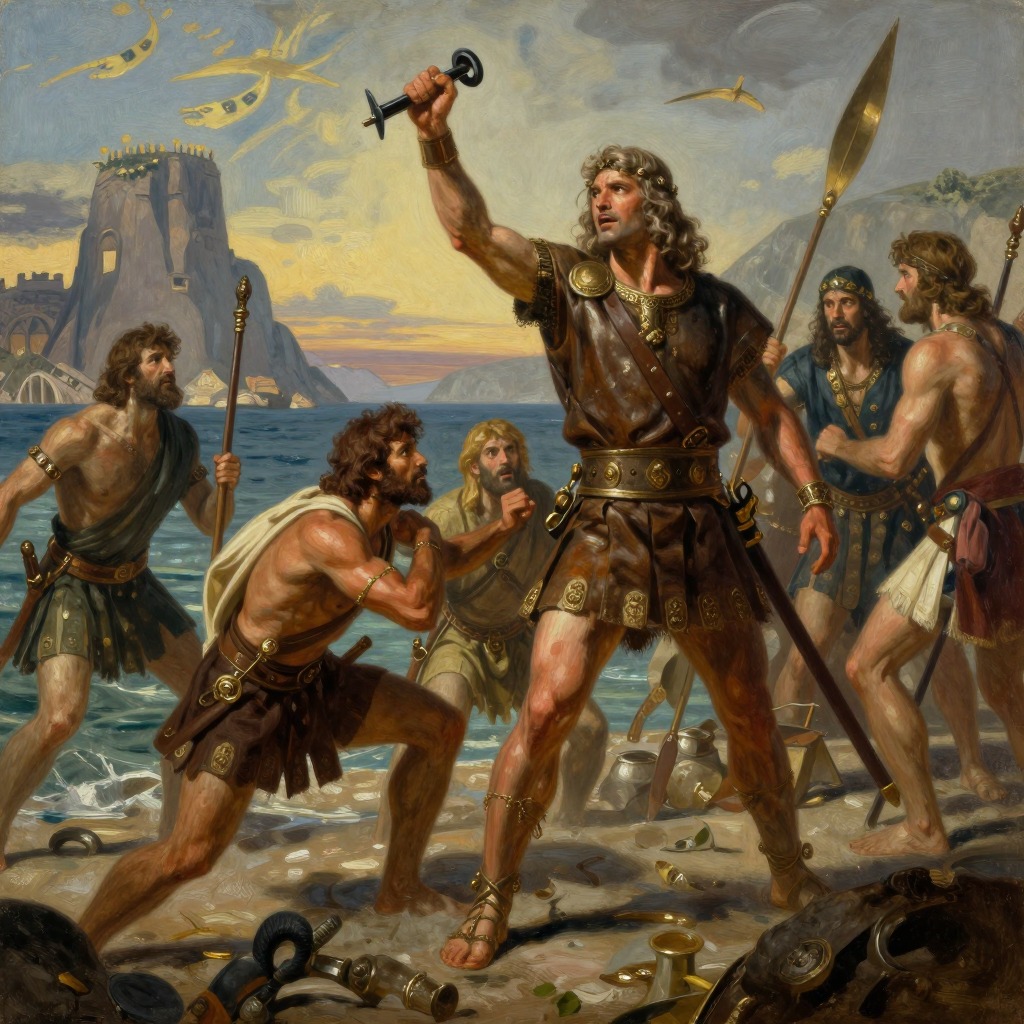
After Demodocus's song, Alcinous proposes athletic contests. When Odysseus is taunted by the young Euryalus, he responds by throwing a discus far beyond any Phaeacian mark. Alcinous then praises his people's skills in dancing and sailing rather than in combat, and orders a display of dancing that delights Odysseus. The king then calls on the twelve chief men of the Phaeacians, including himself, to each contribute a cloak, a shirt, and a talent of fine gold as gifts for Odysseus. Euryalus adds his own sword as an apology. Arete packs the gifts in a chest, and Alcinous promises a golden goblet. The Phaeacians then provide a ship and crew to carry Odysseus to Ithaca.
The Return Voyage and Divine Punishment
The Phaeacian ship carries Odysseus to Ithaca while he sleeps, and they deposit him and his treasures on the shore. On their return voyage, Poseidon, furious that the Phaeacians have defied his will by escorting Odysseus home, turns the ship to stone and roots it in the sea before the harbor. Alcinous, recalling his father Nausithous's prophecy that Poseidon would one day punish the Phaeacians for their safe-conducts, orders a sacrifice of twelve bulls to appease the god and decrees that they will cease escorting strangers. The prophecy is fulfilled: the Phaeacians' unique gift of safe passage is revoked, and their city is threatened with being buried under a high mountain. This punishment underscores the limits of mortal hospitality when it conflicts with divine will.
Narrative Role and Significance
The Phaeacian episode serves as the transition from Odysseus's world of fantastic adventures to the real world of Ithaca. It is the last and most lavish example of xenia in the poem, contrasting sharply with the inhospitable Cyclopes and the lawless suitors. The Phaeacians are also a mirror for the audience: they listen to Odysseus's tales with wonder, just as the poem's listeners do. Their punishment for helping Odysseus foreshadows the suitors' punishment for abusing hospitality, creating a moral symmetry. The episode also allows Odysseus to tell his own story, establishing his identity and kleos before he returns home to reclaim his household.